The Totnes Vire — Race History
The Totnes Vire Stage Race is one of the longest-established races in the UK cycling calendar, with roots stretching back to 1973. The race exists to celebrate the twinning of two towns: Totnes in South Devon and Vire in Normandy, France — a bond that has endured for over half a century and given birth to one of the most beloved fixtures on the domestic road racing scene.
Organised by Mid Devon Cycling Club, the race has seen generations of riders battle across Devon's demanding terrain, from criteriums on the streets of Totnes to lung-busting hill climbs and long road race circuits across Dartmoor.
The Early Years — 1973 to 1980
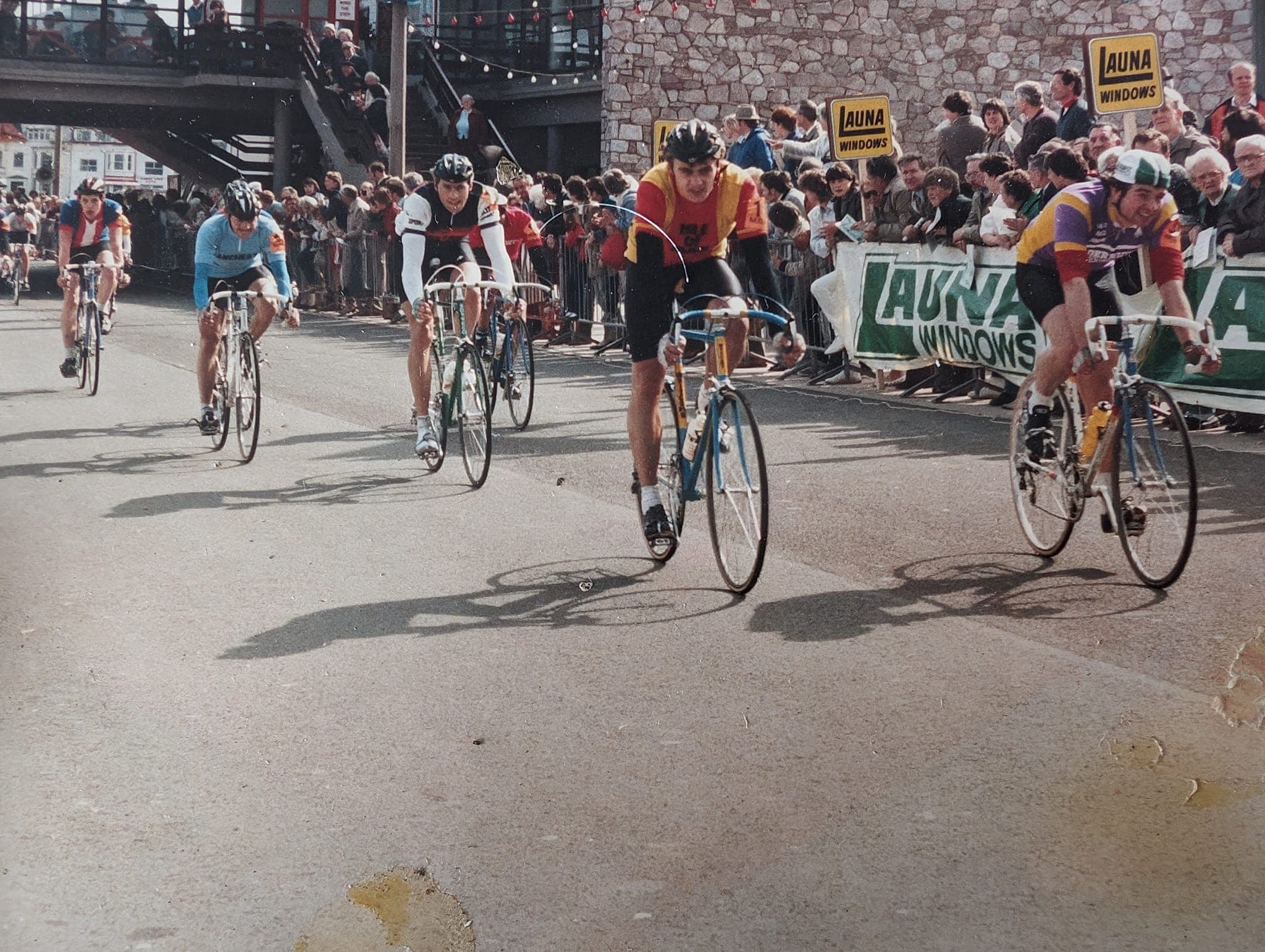
The Launa Windows Classic era, 1980s
The inaugural race was held in 1973, won by Alan Edmonds. Through the late 1970s the event grew steadily as a popular regional fixture, operating as a two-day, two-stage race. Colin Lewis — in whose memory Stage 1 of the 2026 race is named — won the event in 1977. Dave Pitman claimed two victories in this era (1975 and 1979), while Mike Parker of Mid Devon CC took back-to-back wins in 1980 and 1981, with the club filling all three podium places in that 1981 edition.
The Classic Era — 1981 to 1991
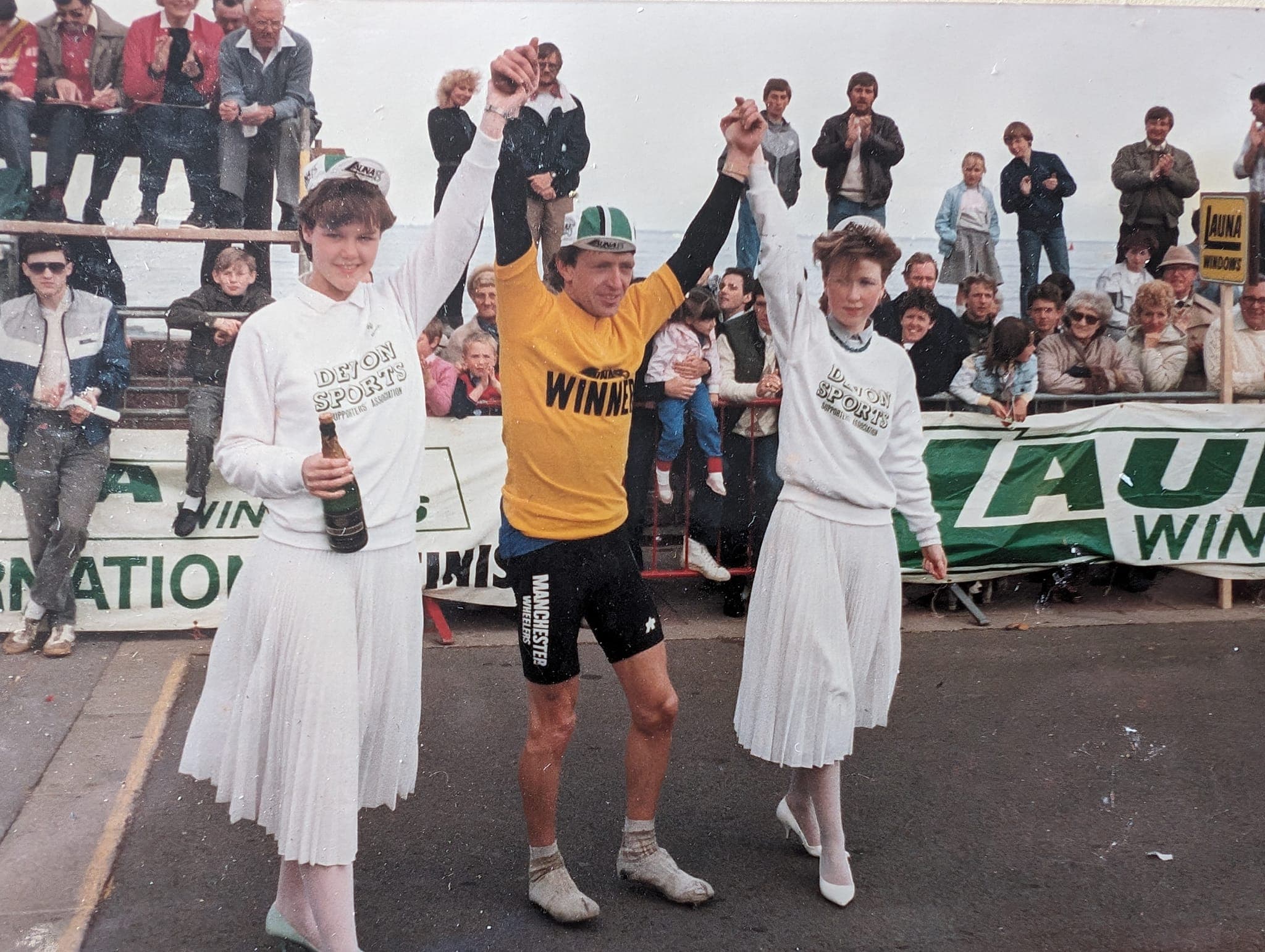
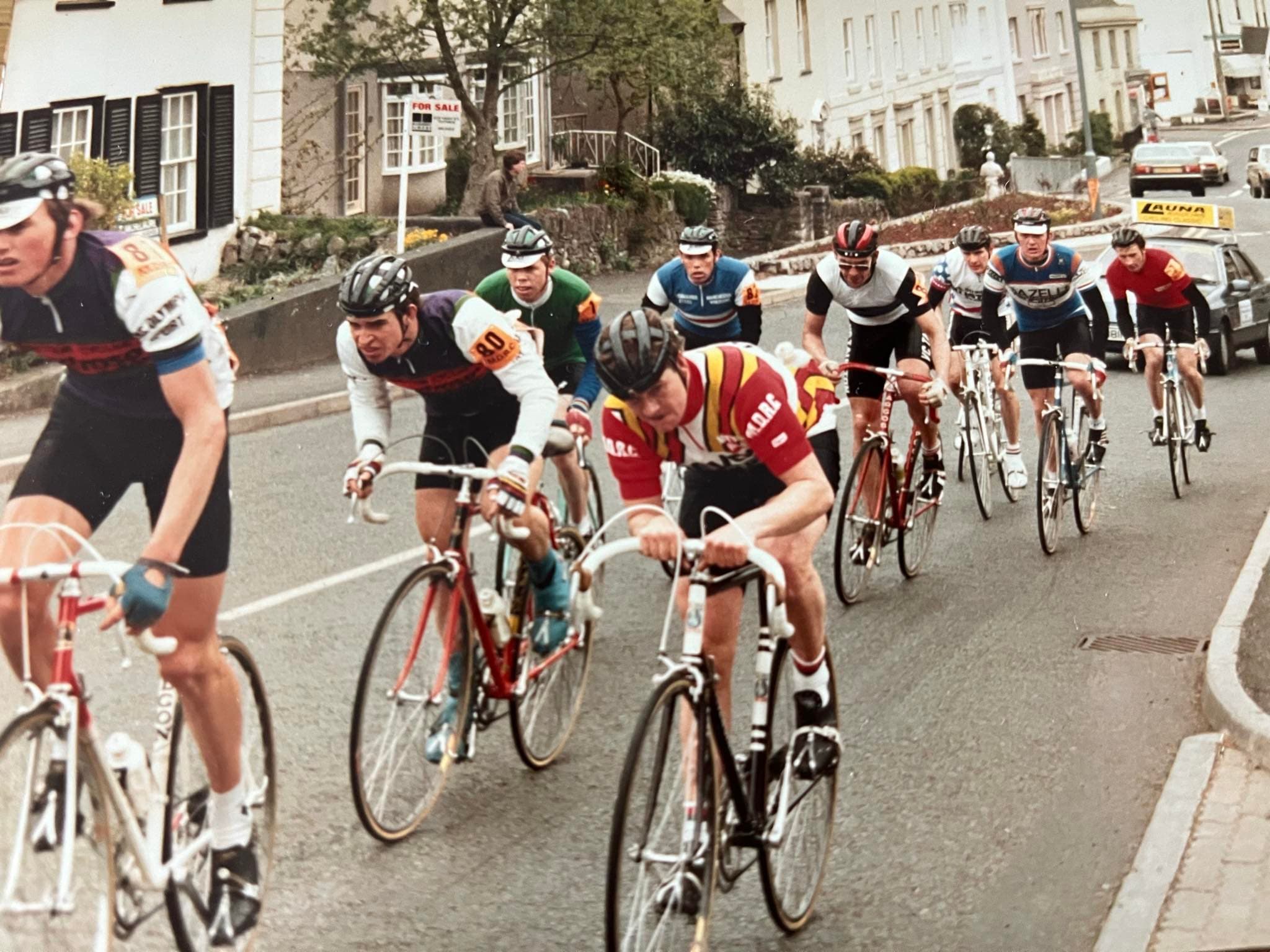
Race action, 1985
The following account of the Classic era was written by Ron Keegan.
Towards the end of the 20th century in the United Kingdom there were hundreds of run-of-the-mill road races, but only a handful of major bike race promotions. The Mid Devon Cycling Club's annual Totnes/Vire twinning race began its transition to a major promotion when, in 1981, it attracted financial support from Launa Windows.
With no media portfolio to impress the Newton Abbot based company, the initial sponsorship was modest — but the first event under Launa's patronage was an immediate success. It boasted tabloid programmes, an advance publicity team, and a champagne-spraying yellow jersey presentation complete with podium hostesses. Local newspaper coverage was extensive, culminating in headline sports billing in the Herald Express and a centre spread feature the following day.
Armed with a book of press cuttings, the club outlined expansion plans and secured increased funding year on year. Past financial constraints had restricted the race to Torbay and The South Hams; now there was freedom to expand, with Exeter and Newton Abbot added to the itinerary and, by 1984, Plymouth. The race became a top-class three-day, six-stage affair, with city centre starts at peak shopping times, closed road criteriums, and media exposure that included regional TV and national newspaper coverage.
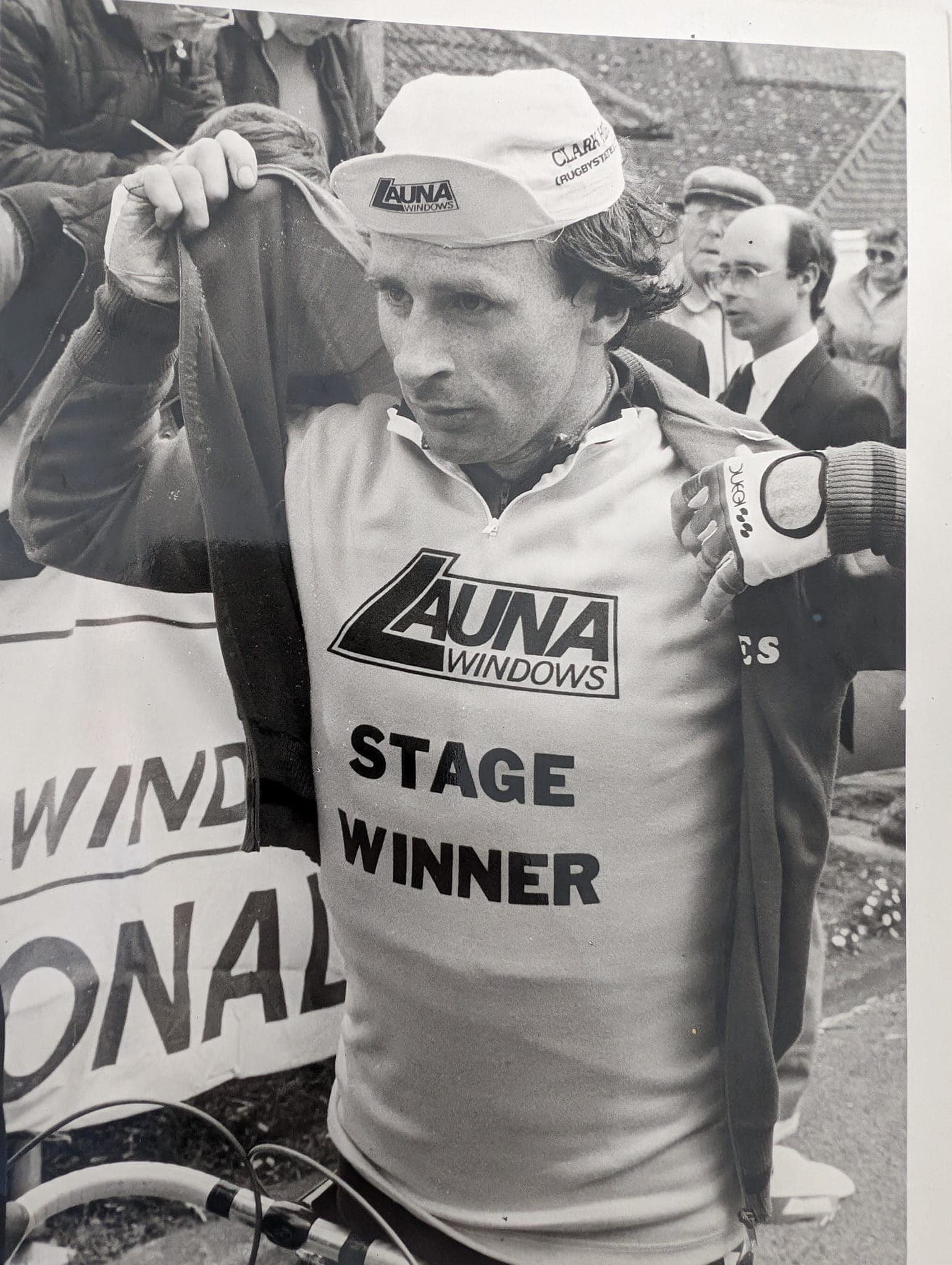
Race leader
The operation grew to match its ambitions. The race had its own Police Liaison Officer, squad cars and outriders in their best leathers. Car dealerships loaned a fleet of vehicles for officials. St John's and the Red Cross followed in ambulances. Three neutral service vehicles provided mechanical cover. Thousands of glossy illustrated programmes were distributed to roadside spectators; hundreds of full-colour posters went up across the region. At daily podium presentations, each stage winner received a jersey, champagne and flowers. A dedicated road crew — who saw virtually nothing of the race itself — spent each day moving barriers, scaffolding, banners and staging in and out of vans.
By 1986 the event was firmly established as the fourth biggest stage race in the country, and the biggest single amateur club promotion in the UK. The organising team listed over forty officials in a race manual running to more than twenty pages; dozens more helpers were drawn in from London, Liverpool, Manchester, Bath and beyond on race weekend.
After six successful years, Launa concluded that the promotion had achieved its marketing goals and directed its sponsorship elsewhere. A new main sponsor was soon found: the Torbay Tourist Board, conscious of the significant contribution the race was making to the local economy — accommodation, restaurant bookings and shopping estimated at approaching six figures in value. The Tourist Board requested that all stages start and finish in Torbay, and so Brixham was added to the itinerary, along with a short evening prologue on the Friday before the opening road stage.
At a time when UK road races were generally restricted to sixty riders maximum, the MDCC promotion had the credibility to request — and be granted — a permit for the largest field ever seen in West Country bike racing. On 1st May 1987, one hundred riders lined up for what was now branded The English Riviera Classic.
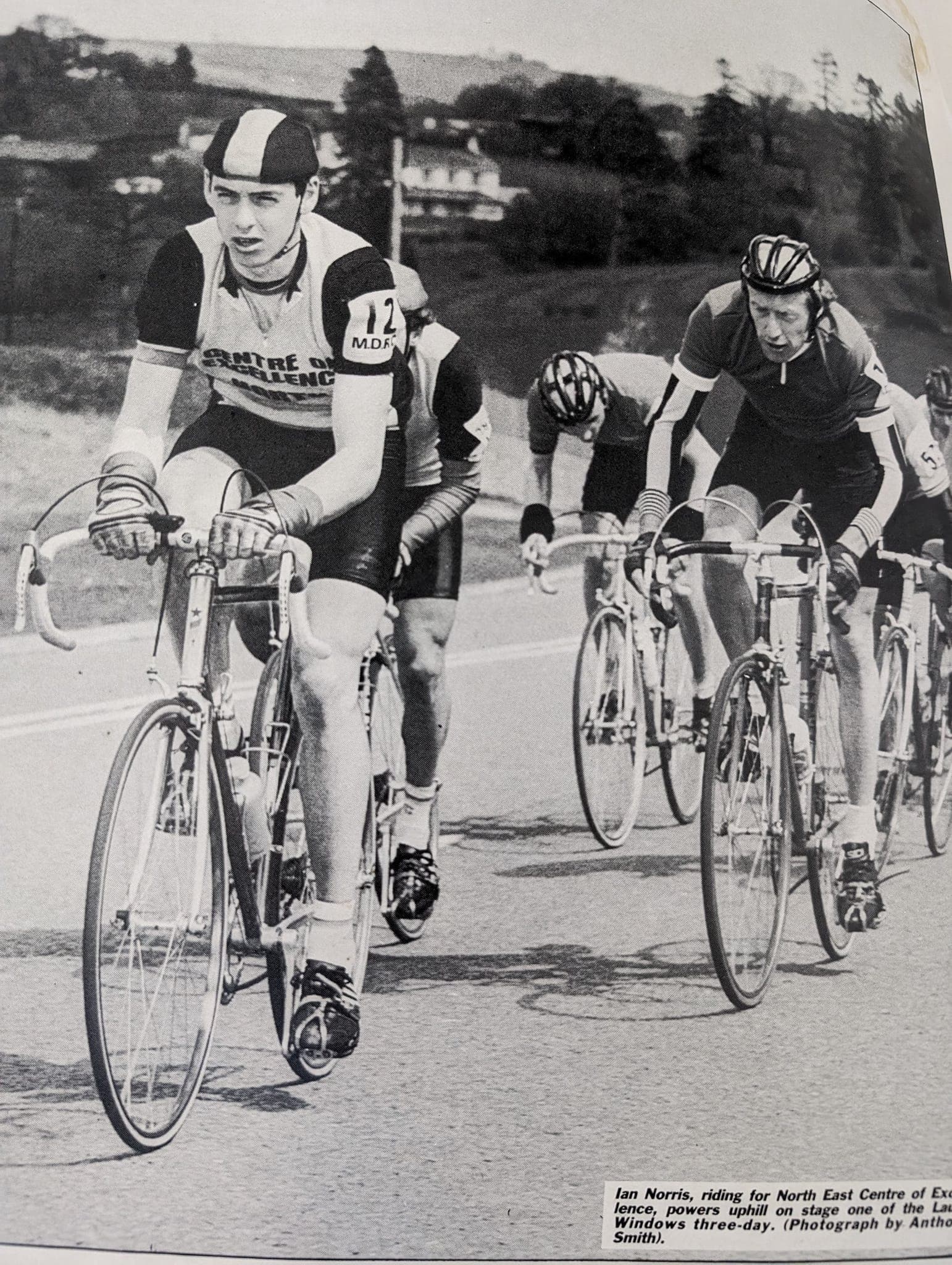
Race leader
The field now included national squads representing England, Ireland, Scotland and Wales, plus the Great Britain Youth team, a National Cycling Association of Ireland quartet, four Centres of Excellence, and the very best of the country's club formations. Photo finish equipment, electronic timing, a computerised results programme and multi-photocopying were all deployed — cutting-edge technology at the time. The Torbay Tourist Board hosted Civic Receptions for riders and officials; the club provided split-stage catering for the competitors.
In 1990, the race moved from the May Day Bank Holiday to Easter, becoming a genuine four-day event with the prologue replaced by an extra Good Friday road stage. For one year the banners read The Inter-Line Riviera Classic, after local builders' merchants Inter-Line substantially increased their co-sponsorship — but by any name, it remained one of the biggest and best bike races in the country, earning inclusion in a full-colour Michelin calendar alongside the Tours de France, Italy and Spain, and World Cup Classics such as Milan–San Remo and Paris–Roubaix.
Notable moments from The Classic
- Mike Parker (Mid Devon CC) took third place overall in 1983 — arguably a more impressive performance than his 1981 victory given the vastly improved quality of the field.
- Peter Georgi finished runner-up in 1986, equal on time with the overall winner.
- Brixham's Andy Hitchens completed perhaps the most remarkable solo stage victory in the race's history, finishing alone on Paignton sea front after a solo break of nearly a hundred miles, before an estimated crowd of over two thousand spectators.
- In 1988, Pascal Guinot of VC St. Étienne — a feeder club for the Peugeot professional squad — led from start to finish to claim the only overseas victory in the Classic's history. His win earned him the front cover of Cycling Weekly, with the back cover also devoted to the event.
- Throughout the Classic era, French riders from the MDCC's twinning partner Vélo Club du Bocage in Vire found themselves increasingly outclassed as the event grew in stature. Despite one attempt to run a separate traditional twinning race alongside The Classic, the gap in level proved too great and their appearances became rare.
The Modern Era — 1999 to Present
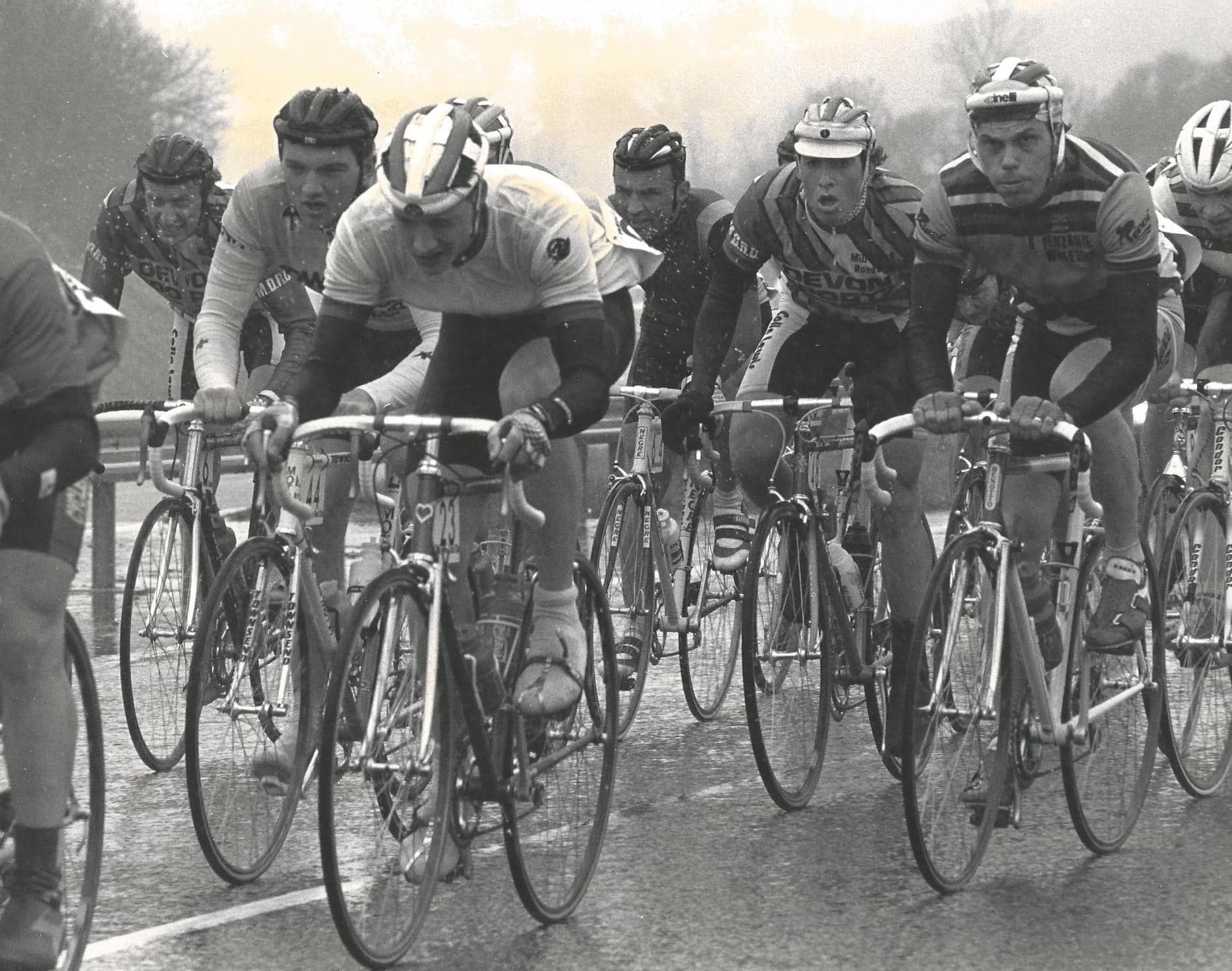
Race, 1991
After a hiatus through much of the 1990s, the race returned in 1999 and found a new generation of devotees. Ben Luckwell became the dominant figure of the early 2000s, winning four times between 2002 and 2006. Keith Ilett had previously claimed three consecutive editions in 1994, 1995 and 1996. Jonathan Tiernan-Locke — later to win the Tour of Britain — won in 2008. Yanto Barker took the victory in 2010. Steve Lampier, a Cornish legend of the domestic scene, won in both 2015 and 2019 and was still competing at the top level as recently as 2025.
In 2025, Luke Barfoot (Primera-TeamJobs) claimed overall victory at the 52nd edition, holding off a fierce challenge over three stages to take the GC title with a time of 4:06:49.
The 53rd Edition — 2026
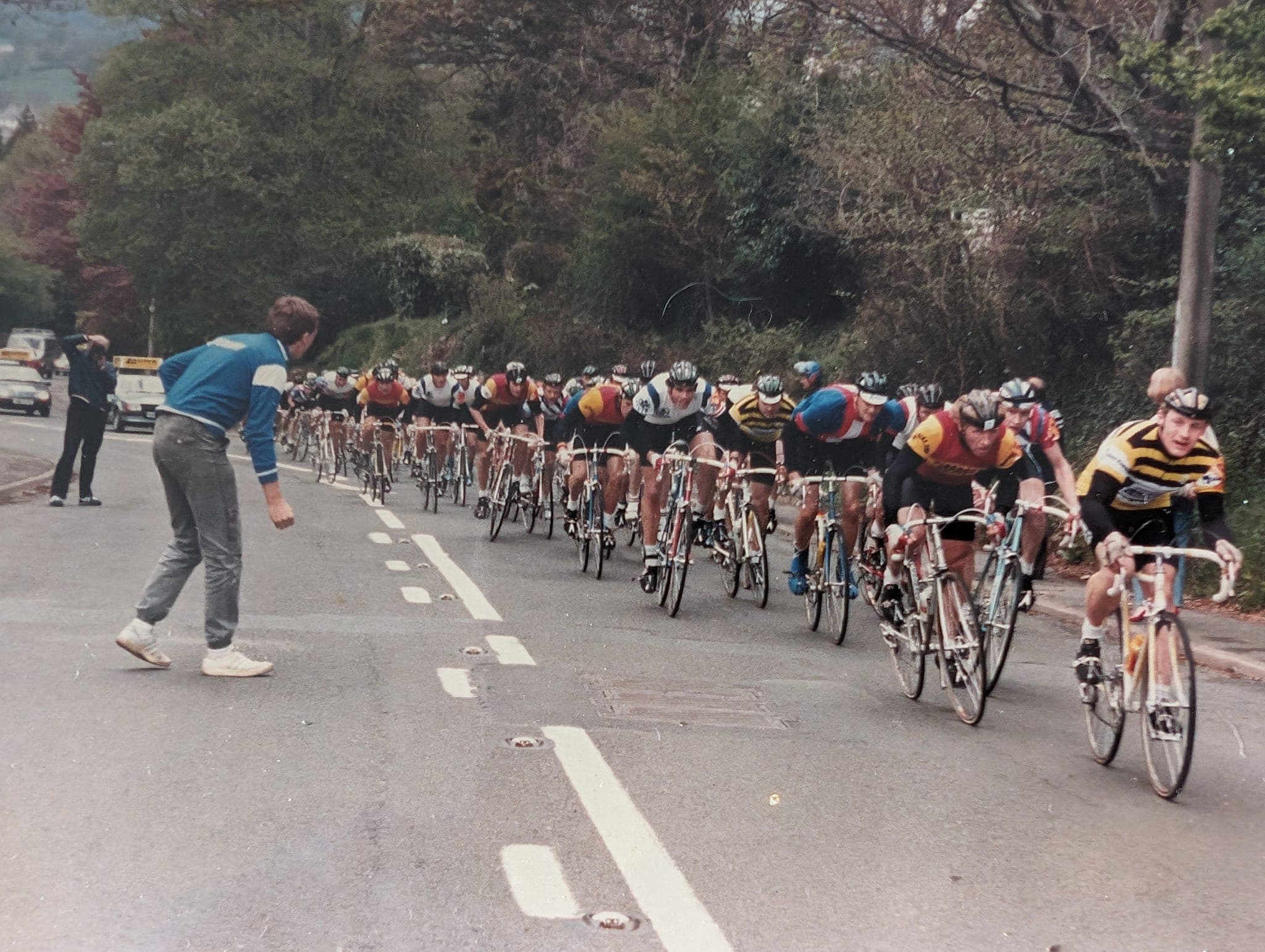
Race leader
In 2026, Mid Devon CC organises the 53rd edition of the Totnes Vire. The race returns as a three-stage, two-day event — and in a special tribute, each stage has been named in memory of three greats of the club who we have lost in recent years.
Stage 1 — Colin Lewis Velopark Criterium (Saturday 4th April) Colin lived in Paignton for many years and ran his successful business from here. The opening criterium runs for 1 hour 15 minutes, with bonus seconds available to fight for throughout.
Stage 2 — Ken's Oddicombe Hill Climb (Saturday 4th April) Reprised from the classic 1980s road race format, the Oddicombe Hill Climb was a roaring success when it returned in 2025. A real leg burner at 0.6 miles, with the road closed for the occasion.
Stage 3 — Roy Hopkins Dartmoor View Road Race (Sunday 5th April) Roy loved a hard day out. With epic views over the North Moor, this challenging 68-mile course takes in two laps of the main circuit and two laps of the finishing circuit, ending at Hatherleigh.
Race action
The Classic Era section (1981–1991) was written by Ron Keegan. All rights reserved.